workOwon
HomeFeedJobsCommunitiesEventsFeaturesAbout workOwon

New to workOwon?

Create a free account to get the most out of your network.

  • Post and join conversations
  • Apply to jobs in a few clicks
  • Join communities in your field

Popular communities

See all

See what professionals are talking about

Browse public posts from people and communities. Join to react, comment and post.

Rohan Malhotra

Staff Engineer @ Orbitly | Distributed systems, Go, Postgres | Writing about architecture tradeoffs

15h ago

Building Scalable Systems: Lessons From 12 Years in Backend Engineering!

After spending 12 years building backend systems, one thing I've learned is that great software engineering isn't just about writing code — it's about designing systems that remain reliable as businesses grow.

As a Staff Engineer at Orbitly, my focus is on multi-tenant architecture, system reliability, and building sustainable technical solutions.

5 Engineering Principles I Strongly Believe In:

1. Scalability Matters
A well-designed system should handle increasing users, requests, and workloads without compromising performance.

2. Reliability Is Non-Negotiable
Monitoring, fault tolerance, and disaster recovery are essential for maintaining dependable applications.

3. Multi-Tenant Architecture Requires Planning
Efficient resource sharing, strong data isolation, and tenant-specific configurations are critical for modern SaaS platforms.

4. Documentation Saves Time
Clear architecture decisions and detailed design documents help engineering teams collaborate and avoid unnecessary confusion.

5. Simplicity Beats Complexity
The best engineering solutions aren't always the most complicated. Simple, maintainable systems often deliver greater long-term value.

My Engineering Philosophy:

"Write code for today, but design systems that can survive tomorrow."

Technology keeps evolving, but the fundamentals of good architecture, reliability, and teamwork remain essential.

Great engineers don't just solve problems — they build systems that prevent future ones.

Question for Software Engineers:

What's more challenging when building large-scale applications?

Scalability
System Reliability
Database Performance
Microservices Architecture

Let's exchange ideas in the comments!

#staffengineer#backenddevelopment#systemdesign#softwarearchitecture#scalability#multitenantarchitecture

Karan Bhatia

Cloud Architect | AWS, Azure, Security | Helping enterprises move to cloud without lighting money on fire

3d ago

Cloud Migration Is Easy to Start, But Hard to Get Right!

Moving applications to the cloud is not just about transferring servers from on-premises infrastructure to AWS or Azure. It's about building a smarter, more secure, and future-ready digital ecosystem.

As a Cloud Architect at Infowave Technologies, I focus on helping BFSI organizations design reliable and scalable cloud solutions.

5 Common Cloud Migration Mistakes Companies Should Avoid:

1. Ignoring Cloud Costs
Without proper planning, cloud expenses can quickly increase. Cost monitoring and resource optimization are essential.

2. Weak Security Planning
Financial data requires strong encryption, identity management, and continuous security monitoring.

3. Skipping Architecture Assessment
Not every application is cloud-ready. Understanding dependencies and infrastructure requirements is crucial.

4. Overlooking Disaster Recovery
A reliable cloud strategy should include backup, recovery planning, and business continuity.

5. Lack of Automation
Manual infrastructure management increases errors. Infrastructure as Code helps improve consistency and efficiency.

My Key Learning:

"Successful cloud migration isn't measured by how quickly you move, but by how securely and efficiently you operate afterward."

AWS and Azure are powerful platforms, but the right architecture makes the real difference.

What do you think is the biggest challenge in cloud migration — Security, Cost, or Performance?

Let's connect and exchange ideas!

#cloudarchitect#aws#microsoftazure#cloudmigration#cloudsecurity#cloudcomputing#devops#digitaltransformation#bfsi#techinnovation#workowon

Priya Banerjee

Data Scientist | NLP, forecasting, Python | Ex-researcher | Women in Tech mentor

3d ago

What If Your AI Model Is 95% Accurate… but Still Useless?

Sounds strange, right?

Imagine building a machine learning model that predicts customer demand with 95% accuracy.

Everyone celebrates.

But here's the twist…

The business still runs out of popular products, and warehouses remain full of items nobody wants.

So what went wrong?

The problem wasn't necessarily the algorithm. It was how success was measured.

As a Data Scientist working with Demand Forecasting and NLP, I've learned that impressive metrics don't always translate into meaningful business results.

5 Lessons Every Data Scientist Should Know:

1. Accuracy Isn't Everything
Choose evaluation metrics that reflect the actual business problem.

2. Understand the Data First
Exploratory Data Analysis often reveals insights that sophisticated algorithms miss.

3. Simple Models Can Win
A well-designed statistical model can sometimes outperform a complex ML solution.

4. Business Impact Matters Most
A useful prediction should help someone make a better decision.

5. Explainability Builds Trust
A model becomes more valuable when stakeholders understand its predictions and limitations.

My Biggest Takeaway:

The goal of Data Science isn't to build the smartest model.

It's to solve the right problem with the right data and create measurable impact.

Sometimes, the best AI solution isn't the most complicated one!

Would you choose a 95% accurate model that's difficult to interpret or a simpler 85% accurate model that delivers better business results? Why?

#datascience#machinelearning#artificialintelligence#predictiveanalytics#demandforecasting#nlp#datascientist#statistics#aiinnovation#womenintech

Priya Banerjee

Data Scientist | NLP, forecasting, Python | Ex-researcher | Women in Tech mentor

3d ago

Today’s reminder: Data Science is not just about models — it’s about solving meaningful problems.

As a Data Scientist working on demand forecasting and NLP, I’ve learned that the real value of data comes from turning complexity into clear, useful decisions.

At Insightloop AI, every project is a chance to combine statistics, machine learning, and business understanding to create solutions that actually matter.

What today’s work in Data Science reminds me:

Clean data matters as much as complex models
Forecasting helps businesses plan smarter
NLP turns unstructured text into actionable insights
Statistics is the foundation of strong decision-making
Sharing knowledge makes the data community stronger

One more thing I deeply value is helping more women step confidently into data roles.
Because growth becomes more meaningful when we grow together.

Today’s takeaway:
Data Science is not only about predicting outcomes.
It’s about understanding patterns, solving real problems, and creating impact through insight.

Keep learning. Keep building. Keep empowering.

#datascience#datascientist#nlp#demandforecasting#machinelearning#statistics#womenintech#analytics#artificialintelligence#careergrowth

Nikhil Chowdhury

Backend Engineer | Python, Django, Postgres | Fintech | Remote-first

3d ago

Building Better Digital Experiences Through Technology & Innovation!

As a Platform Administrator, I believe that a successful professional networking platform is built on trust, transparency, and meaningful opportunities.

Managing a digital platform is more than just handling operations. It's about creating a secure, reliable, and user-friendly environment where professionals and businesses can grow together.

Key Responsibilities of a Platform Administrator:

Job Management – Reviewing and managing job listings to maintain quality and relevance.

Company Verification – Helping maintain a trustworthy environment by reviewing company details and verification requests.

Platform Operations – Monitoring administrative activities and supporting smooth platform functionality.

User Trust & Security – Promoting transparency, authenticity, and a safer professional experience.

Continuous Improvement – Identifying opportunities to enhance platform efficiency and user experience.

My Perspective:

"Great platforms don't just connect people — they create opportunities, build trust, and empower professional growth."

At Workowon, the goal is to support a professional ecosystem where job seekers, recruiters, and businesses can connect and discover meaningful opportunities.

Technology creates possibilities. Trust creates lasting connections.

What's the most important feature you look for in a professional networking platform?

Share your thoughts in the comments!

#platformadministrator#workowon#professionalnetworking#digitalinnovation#jobopportunities#platformmanagement#careergrowth#techleadership#digitaltransformation#communitybuilding

Vaibhav

Senior Backend Engineer @ Paylane | Java, Spring Boot, Kafka | Building payment rails that don't wake you up at 3am

1d ago·Placement Prep & Career Switch

📄 Your Resume Gets You the Interview — Are You Making It Count?

Many talented students and freshers struggle to get interview calls, not because they lack skills, but because their resumes don't communicate their value effectively.

Here are 5 simple ways to improve your resume:

  1. Keep it clear: Use a clean, professional, easy-to-read format.

  2. Highlight projects: Include practical projects that demonstrate your skills.

  3. Show achievements: Mention measurable results wherever possible.

  4. Add relevant skills: Match your technical skills to the job description.

  5. Avoid unnecessary information: Keep your resume focused and concise.

Let's discuss!

What's your biggest resume challenge?

  • Creating your first resume

  • Making your resume ATS-friendly

  • Showing projects and internships

  • Explaining employment gaps

  • Getting shortlisted by recruiters

Share your questions and experiences. Let's help each other build stronger resumes and get closer to our dream jobs!

#ResumeTips#Freshers#PlacementPreparation#ATSResume#TechJobs

Vaibhav

Senior Backend Engineer @ Paylane | Java, Spring Boot, Kafka | Building payment rails that don't wake you up at 3am

3d ago·Tech & Dev Memes

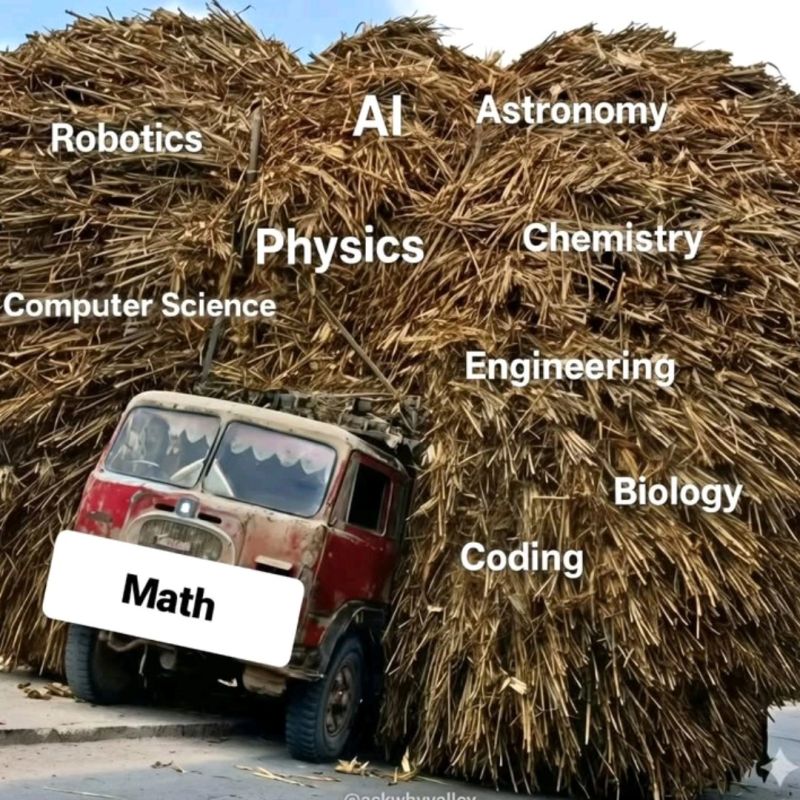
Math is the biggest challenge in Computer Science! 😂

AI, Robotics, Physics, Coding, and Engineering — everything needs a strong mathematical foundation.

No Math, No Magic!

#Mathematics #ComputerScience #AI #Coding #StudentLife

#Mathematics#ComputerScience#AI#Coding#StudentLife
Post image

Karan Bhatia

Cloud Architect | AWS, Azure, Security | Helping enterprises move to cloud without lighting money on fire

3d ago

Cloud Architecture: Building Smarter, Safer & Scalable Solutions!

As a Cloud Architect at Infowave Technologies, I focus on helping BFSI organizations adopt secure, scalable, and cost-efficient cloud solutions using AWS and Microsoft Azure.

5 Key Principles of Successful Cloud Architecture:

1. Security First: Protect sensitive data through encryption, access controls, and continuous monitoring.

2. Cost Optimization: Use resources efficiently, eliminate unnecessary spending, and monitor cloud costs.

3. Strong Landing Zones: Establish secure foundations with proper networking, governance, and identity management.

4. Scalability & Reliability: Design infrastructure that supports business growth and handles changing workloads.

5. Automation: Implement Infrastructure as Code (IaC) and automated deployments to improve efficiency.

My Perspective:

"Great cloud architecture isn't about using more services. It's about choosing the right solutions for security, performance, and business success."

As an AWS Certified Solutions Architect – Professional, I believe continuous learning and innovation are essential in today's cloud-driven world.

What's your biggest cloud challenge — Security, Cost, Migration, or Performance?

Share your thoughts below!

#cloudarchitecture#aws#azure#cloudcomputing#cloudsecurity#cloudmigration#devops#bfsi#cloudengineer#workowon

Neha Trivedi

UI/UX Designer | Figma, design systems, mobile UI | Open to product design roles

3d ago

From Civil Engineering to UI/UX Design — My Journey of Turning Creativity Into a Career!

Who says your degree has to define your career?

I started my journey in Civil Engineering, but my curiosity and passion for creativity led me into the world of UI/UX Design.

Today, working on mobile applications for startups at Appverse Studio, I've realized that great design isn't just about making things look beautiful — it's about making technology easier for people to use.

5 Lessons From My UI/UX Design Journey:

1. User Experience Comes First
A beautiful interface means little if users struggle to navigate it. Good design starts with understanding user needs.

2. Simplicity Is Powerful
The best designs aren't always the most complicated. Clean layouts, clear navigation, and intuitive interactions create better experiences.

3. Mobile-First Thinking Matters
Designing for mobile apps has taught me the importance of accessibility, responsiveness, and seamless user journeys.

4. Feedback Helps You Grow
Every design critique is an opportunity to improve, experiment, and see problems from a different perspective.

5. Your Background Doesn't Limit Your Future
Switching careers taught me that curiosity, consistency, and practical learning can open unexpected opportunities.

My Biggest Takeaway:

You don't need to follow a traditional path to become a great designer.

You need curiosity to learn, creativity to explore, and empathy to understand users.

Every wireframe, prototype, and design challenge brings me one step closer to becoming a better designer.

Design With Purpose. Learn Every Day. Create Experiences That Matter!

What's more important in UI/UX Design — creativity, user research, or problem-solving?

#uiuxdesign#uidesigner#uxdesigner#productdesign#mobileappdesign#userexperience#designthinking#careerswitch#figma#womenindesign#opentowork

Neha Trivedi

UI/UX Designer | Figma, design systems, mobile UI | Open to product design roles

5d ago

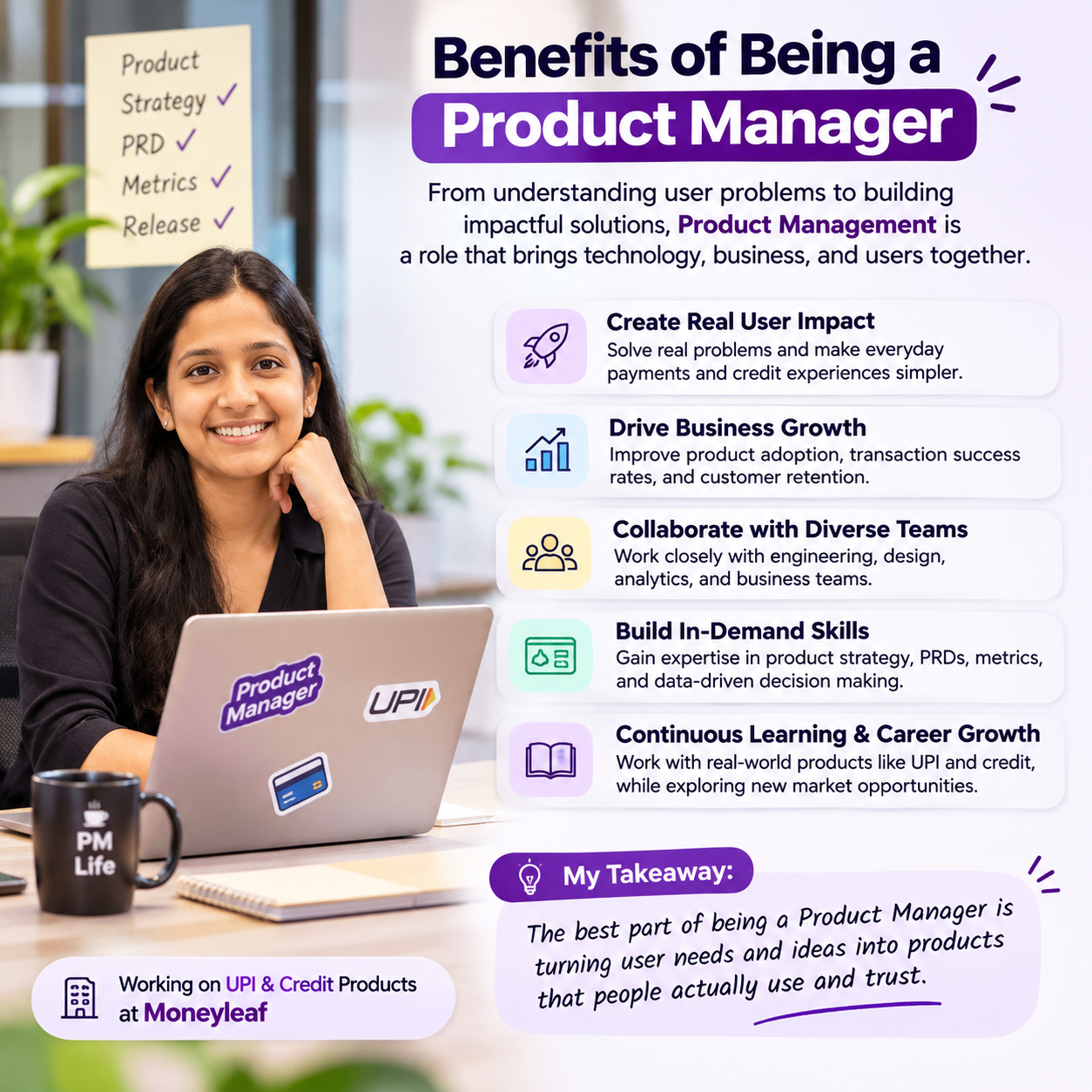
7 Benefits of Being a Product Manager in Fintech!

Moving from Software Engineering to Product Management has taught me that building successful products requires more than technical skills.

It's about understanding customers, solving meaningful problems, and turning ideas into real business impact.

Here's why I love Product Management:

1. Solve Real Customer Problems
Build solutions that make digital payments and financial services simpler and more accessible.

2. Make Data-Driven Decisions
Use transaction success rates, retention, and adoption metrics to improve product performance.

3. Combine Technology With Business
My engineering background helps me understand technical challenges while focusing on customer needs.

4. Drive Product Innovation
Explore opportunities to improve UPI payments, credit products, and financial experiences.

5. Collaborate With Diverse Teams
Work with engineers, designers, analysts, and business teams to create meaningful solutions.

6. Strong Career Growth
Develop skills in product strategy, leadership, communication, and decision-making.

7. Continuous Learning
Every product challenge teaches something new about user behavior, technology, and business growth.

My Biggest Takeaway:

A Product Manager doesn't just manage features.

They connect customer problems with technology and business goals to create products that truly matter.

Think Strategically. Build Purposefully. Create Impact!

What excites you most about Product Management — innovation, leadership, or problem-solving?

#productmanagement#productmanager#fintech#upi#digitalpayments#productstrategy#womenintech#productdevelopment#careergrowth
Post image
Older posts

Featured jobs

See all

Popular communities

See all