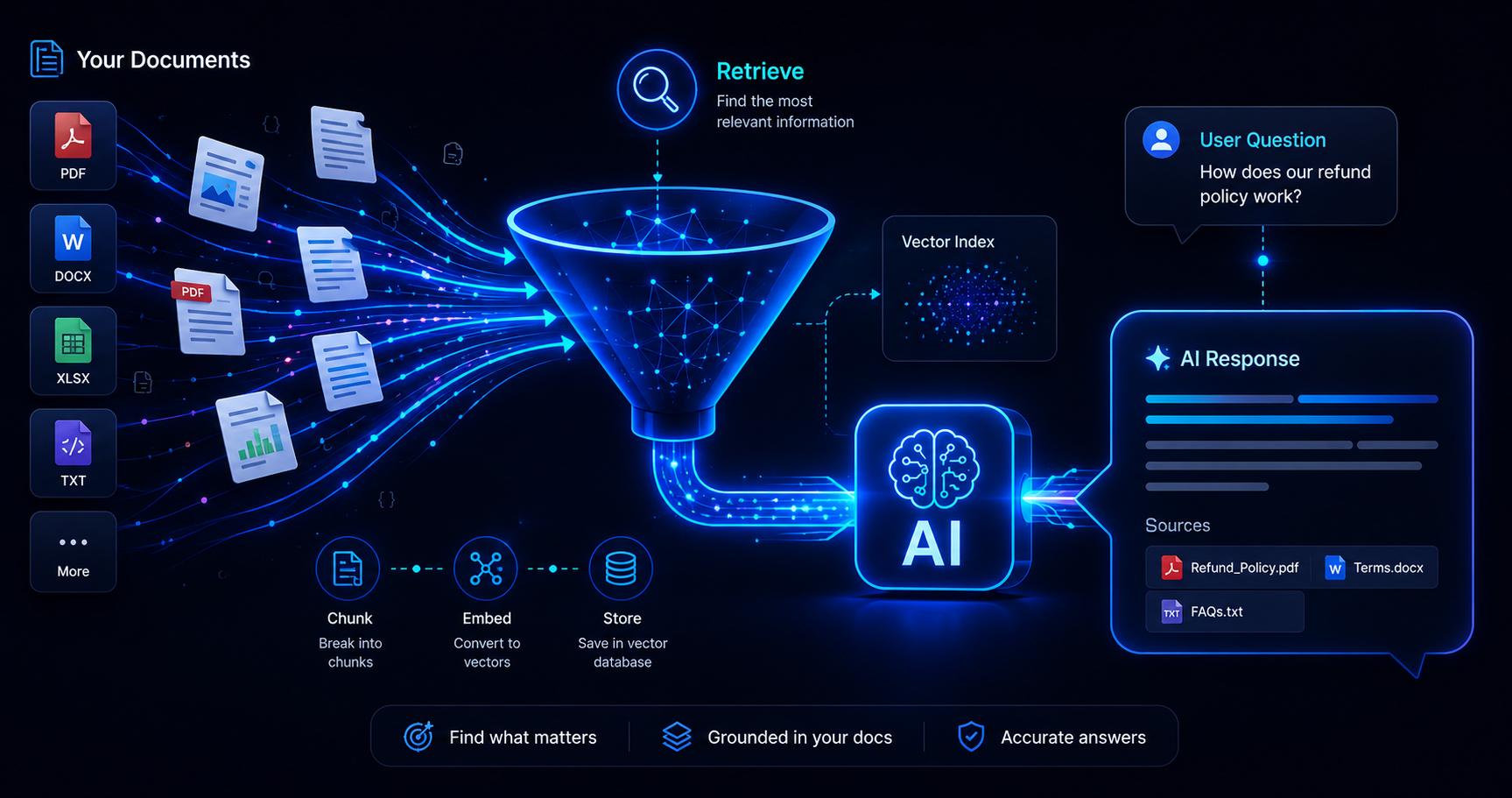
Building an LLM Application Is Easy. Making It Reliable Is the Real Challenge!
Ishaan Reddy
ML Engineer | LLMs, RAG, Python | Shipping AI features that survive production
Building an LLM Application Is Easy. Making It Reliable Is the Real Challenge!
Large Language Models can generate impressive answers, but building a production-ready AI application requires much more than connecting an API to a chatbot.
While working with Retrieval-Augmented Generation (RAG), there are several important things to consider:
1. Retrieval Quality Matters
Even a powerful LLM cannot provide a grounded answer if the retriever returns irrelevant documents. Better chunking, embeddings, and ranking can improve results.
2. Evaluate Before You Optimize
Create a representative test dataset and measure retrieval relevance, answer correctness, and faithfulness instead of relying only on a few manual examples.
3. Keep Latency Under Control
Use efficient retrieval, appropriate model selection, streaming, and carefully designed caching to improve response times.
4. Track the Cost Per Request
Long prompts, unnecessary context, and repeated model calls can quickly increase inference costs. Measure token usage and optimize where it matters.
5. Know When Not to Use an LLM
For simple rules, exact lookups, or deterministic calculations, traditional code may be faster, cheaper, and more reliable.
The key lesson: A successful GenAI product isn't measured only by how impressive its demo looks. It must deliver useful, accurate, fast, and cost-effective results consistently.
The real engineering challenge begins when the application meets real users and real-world edge cases.
ML and AI engineers: What's the biggest challenge you've faced in production — retrieval quality, hallucinations, latency, or cost?
#MachineLearning #GenerativeAI #LLM #RAG #ArtificialIntelligence #MLOps #AIEngineering #LLMEvaluati
#machinelearning#generativeai#llm#rag#artificialintelligence#mlops#aiengineering#llmevaluati