Breaking into tech can feel impossible right now. Every job post asks for "2+ years of experience", hundred…
Harshit
Vice President
Breaking into tech can feel impossible right now. Every job post asks for "2+ years of experience", hundreds of people apply within a day, and it's hard to know what actually makes a difference. The good news: companies are still hiring juniors. They are just more careful about who they pick. Here is a practical plan that works, based on what hiring managers actually look for.
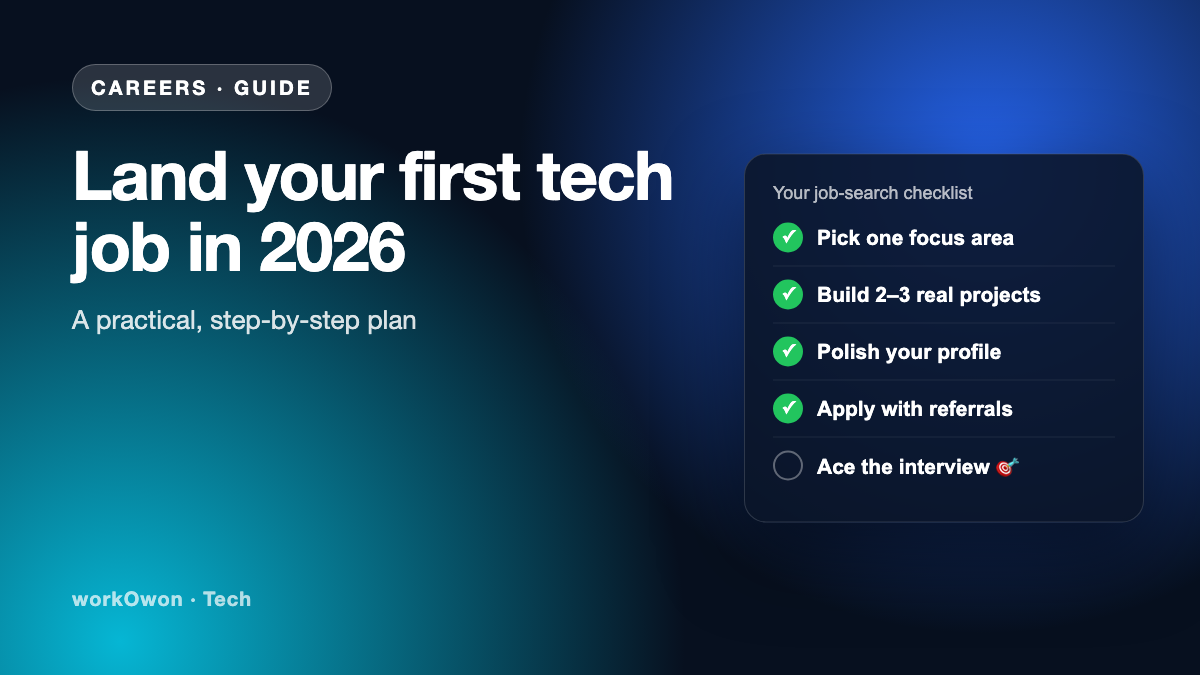
🎯 Step 1: Pick one focus area
"Software developer" is too broad. Choose one lane for the next six months: frontend, mobile, backend, data or cloud. Depth in one area beats a little bit of everything. You can always branch out once you are in.
🛠️ Step 2: Build 2–3 real projects, not 10 tutorials
Tutorial projects all look the same to a recruiter. Build something that solves a real problem, even a small one: an expense tracker for your hostel, a booking page for a local shop, a bot that summarises your college notices. Deploy it, put it on GitHub with a clear README and screenshots, and be ready to explain every decision you made.
✨ Step 3: Make your profile do the work
Your profile is often read before your resume. Use a clear headline ("React Native developer | Building mobile apps for small businesses"), list your projects with links, and share what you learn. One short post a week about a bug you fixed or a concept you understood builds visible proof of your skills.
🤝 Step 4: Apply with referrals, not just the "Apply" button
A referral can multiply your chances of getting an interview. Connect with people at companies you like, comment thoughtfully on their posts, and ask specific questions. When you ask for a referral, share the job link, your resume and two lines on why you're a good fit. Make it easy to say yes.
💬 Step 5: Prepare for the interview like a project
Practise data structures for 30 minutes a day, but don't ignore the basics: how the web works, how databases store data, how Git works. Most importantly, practise explaining your own projects out loud. Clear communication often decides between two equally skilled candidates.
📌 Bonus tips
• Apply within the first 48 hours of a job being posted.
• Tailor the top third of your resume for each role.
• Track every application in a simple spreadsheet and follow up after a week.
• Rejections are data, not verdicts. Ask for feedback whenever you can.
Your first job is the hardest one to get. After that, every step gets easier. Stay consistent, keep building, and let your work speak for you. 🚀
💬 If you've already landed your first tech job, what helped you most? Share it in the comments so others can learn from you.
#careers#techjobs#jobsearch#freshers#careeradvice